
The 24 to 48 hour rule
Drywall is paper-faced gypsum. The paper is organic, the gypsum is porous, and both are mold food once wet. The industry standard (IICRC S500) is that contaminated or saturated drywall left wet beyond 48 hours should be removed, not dried. Clean-water exposure caught quickly can often be dried in place.
Categories of water and what they mean for your walls
Not all water is equal. The water category drives the repair-vs-replace decision.
- Category 1 (clean): supply line break, rainwater. Drywall caught within 48 hours is usually saveable.
- Category 2 (gray): appliance overflow, sump pump failure, aquarium. Saturated drywall typically gets removed; lightly damp drywall above the wet zone may dry.
- Category 3 (black): sewage backup, river flooding, long-standing standing water. All affected drywall comes out - no exceptions.
How we test instead of guessing
A drywall surface that feels dry to the touch can still read 40% moisture content internally. We use pin and pinless moisture meters, and infrared imaging to map the actual wet area - then mark the cut line a full 12 inches above the highest moisture reading (the standard flood cut).
What 'dry in place' actually requires
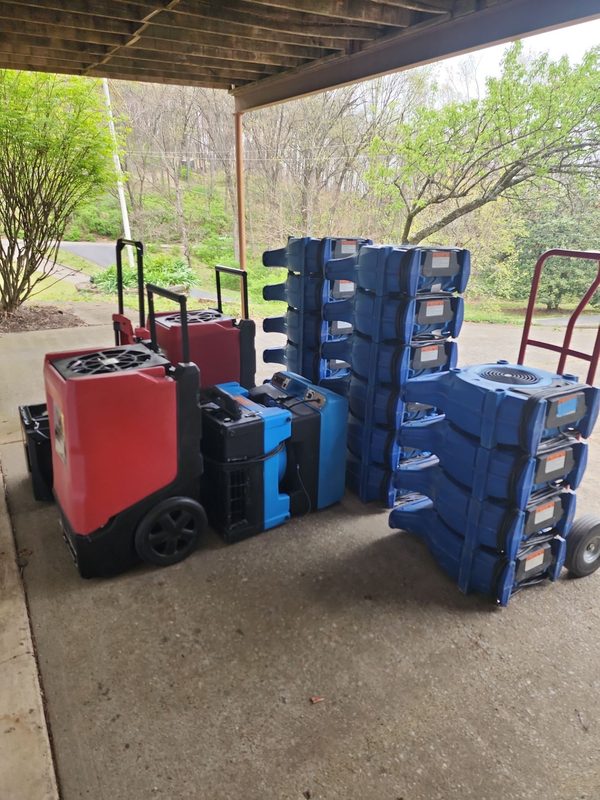
Drying drywall in place isn't a fan in the corner. It's controlled airflow plus dehumidification plus daily moisture monitoring until readings match unaffected reference areas. Insulation in the wall cavity also has to be dried or removed - wet fiberglass loses R-value permanently, and wet cellulose has to come out.
Hidden costs of cutting corners
Painting over damp drywall traps moisture against the gypsum and behind the paint film. Within weeks you see bubbling, staining, and musty odor. Within months, mold colonizes the back side of the drywall and the wall cavity - turning a $500 drywall patch into a $5,000 mold remediation. Do it once, do it right.
Insurance and documentation
Wisconsin homeowner policies generally cover sudden water damage from a covered cause. The carrier will want moisture readings, photos of cuts, daily drying logs, and a final clearance reading. We provide that documentation as part of standard scope - it's what gets the claim paid.
Need professional help with this in Madison or Dane County? Our IICRC-certified crews respond 24/7.
Call (608) 218-5869