
Water damage is the most common type of homeowners insurance claim in Wisconsin - and also the most misunderstood. Coverage hinges on a few specific terms in your policy: 'sudden and accidental,' 'gradual,' 'surface water,' and 'sewer backup.' Knowing how those phrases interact with the actual cause of your loss determines whether your claim is approved, denied, or reduced.
This guide is written for Madison and Dane County homeowners. We'll cover what's typically covered, what isn't, the two endorsements every basement-owning Wisconsin homeowner should consider, and how to handle the claim itself so it goes smoothly.
The general rule: sudden and accidental
Standard homeowner policies cover water damage that's sudden and accidental - burst pipes, appliance failures, ice-dam leaks. They generally don't cover gradual seepage, neglected maintenance, or surface flooding.
What's typically covered
- Burst water-supply lines (a wall or ceiling that suddenly opens up)
- Failed appliance hoses (washing machines, dishwashers, refrigerators)
- Frozen pipe bursts (when reasonable heat was maintained)
- Roof leaks from a covered peril (storm, wind)
- Accidental overflow of plumbing fixtures
What's typically NOT covered
- Surface flooding - requires separate flood insurance through NFIP
- Sewer/drain backups - requires a separate water backup endorsement
- Gradual leaks (a slow leak under a sink that went unnoticed for months)
- Mold without a covered triggering loss
- Foundation seepage from groundwater
The endorsements every Madison homeowner should consider
If your home has a basement or finished lower level, two add-ons are worth the small cost: a sewer/water backup endorsement (typically $40-$100/year) and, in flood-prone areas, NFIP flood insurance.
What to do at the time of loss
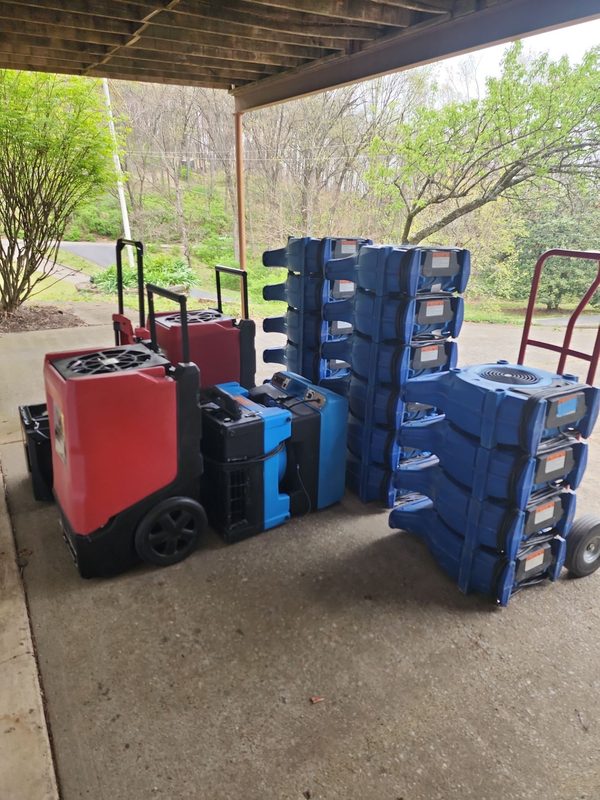
Stop the source if you can. Photo everything before cleanup. Open a claim within 24 hours. Hire a restoration company that documents the loss professionally and bills the carrier directly - that's the difference between a smooth claim and a frustrating one.
Understanding the 'mitigation' obligation
Every homeowners policy includes a duty to mitigate - meaning you're required to take reasonable steps to prevent further damage after a loss. Tarping a roof, shutting off water, and getting an extraction crew on-site within 24 hours all qualify. Letting wet drywall sit for a week before calling anyone does not, and carriers can - and do - reduce or deny claims for failure to mitigate.
When in doubt, document the loss with photos, then call both your carrier and a restoration company simultaneously. Most carriers have authority to approve emergency mitigation by phone within an hour.
How adjusters actually price a claim
Carrier-side adjusters use Xactimate or Symbility software to build line-item estimates with regional pricing. A reputable restoration company in Madison submits an aligned scope using the same software, which makes negotiation straightforward - both sides are speaking the same language and pricing the same activities.
Where claims tend to bog down: depreciation calculations, scope disagreements (is a wall dry-in-place or demo?), and personal property valuation. A good restoration team documents the moisture readings and scope decisions in writing, which dramatically reduces back-and-forth.
When you might want a public adjuster
For claims over $100,000, with disputed scope, or when you're not getting reasonable communication from your carrier, a public adjuster can be worth the typical 10-15% fee they charge. For routine residential water damage under $50,000 with a competent restoration team handling documentation, a public adjuster usually adds cost without adding value.
Need professional help with this in Madison or Dane County? Our IICRC-certified crews respond 24/7.
Call (608) 218-5869